Showing posts with label feed. Show all posts

Thursday, 17 December 2015

SPILLERS fed Leo’s journey to Olympia 2015: Part 2!


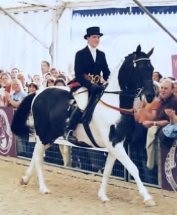
Leo, winning HOYS in 1998. Photo credits Real Time Imaging
Following his triumphant performance at Arena UK in July 2015, 24 YO coloured stallion Lostock Huntsman (Leo) and his handler, Bethany, are now preparing for their showing debut at the prestigious Olympia Horse Show in December 2015. Before I recap on where we all are now, let’s pick up where my last blog finished just after Leo had qualified for Olympia.

Back To Reality… For Now
Once Leo returned home after Arena UK, he settled back into his normal routine, enjoying his SPILLERS® Senior Conditioning Mix feed alongside summer turnout. Leo was also kept busy as a total of 6 mares were covered and in foal by him over the summer.

Goodbye Summer, Hello Autumn!
As autumn approached our thoughts turned towards preparing Leo for his Olympia performance. Leo’s skin and coat condition had improved immensely since changing his diet to SPILLERS® Senior Conditioning Mix, and it was time to decide whether to clip him. Of course, we wanted Leo to look his best at Olympia and as his new and improved coat was so healthy and glossy, we decided to not have him clipped. Unfortunately for us, Leo enjoys nothing more than a mud bath which meant that we were leading in a brown horse from the field rather than a coloured!

Beth and Leo out on
one of their hacks.
Operation: Keep Leo Fit For Olympia
As the fields became continually wetter, Leo’s turnout had to be cut down. In order to keep him in shape for Olympia, Bethany and I had decided that Leo would benefit from some gentle exercise and hacking seemed like the ideal workout. Both Beth and Leo really enjoy their hacks and it is lovely to see Leo’s ears pricked forward every time they leave the yard. Even after being out of ridden work for more than 2 years, Leo still has the same enthusiasm as he did when he hunted! The new riding jacket provided by SPILLERS® has also come in handy as Beth looks very smart when out hacking!

Leo’s Leading Weeks Until Olympia
Leo’s recipe for success now involves a daily routine of the following exercises:

·        A leg stretch in the field.
·        A gentle hack round the lanes with Bethany.
·        Some in hand showing practice. Trotting a figure of 8 seems to be Leo’s strong point, although Beth sometimes struggles to keep up with his strides!

 Of course, Leo does not go without a daily pamper session which includes:

·        A 20 minute groom.
·        A hot oil rub down for his coat.
·        Moisturising spray on his mane and tail before being rugged up ready for bed.  

To ensure that Leo is always as snug as a bug in a rug, our friend Maralyn had kindly made him an under blanket made of double thickness moleskin fleece which we always use under his rugs.

 The Countdown Begins
 
Beth, 6 months old at HOYS 1998.
Our countdown has finally begun with only a couple of days left until Bethany and Leo compete at the Olympia Horse Show in London. We’re all feeling very excited now as the hotel is booked, tickets are purchased and checklists are being made. This will be the first time that Leo has been back to London since he competed at the Horse of The Year Show in 1998 at Wembley. It all feels quite surreal to me as Beth was only 6 months old when we took her and Leo to Wembley, and now 17 years later she will be leading him herself. I will be very proud of them both whatever the outcome.

Wednesday, 28 October 2015

Feeding Fizzy, Excitable Horses Throughout The Firework Frenzy!


Bonfire night is looming, and for those of you with especially nervous or excitable horses, the idea of a ride following a festival of fireworks overnight, may not be a welcome one. Below are a few tips to help you try to avoid any undesirable performances from your horse or pony.

How can feed affect excitable horses?
Whilst many factors can have an effect, nutritionally a high fibre, controlled starch diet is the best way to feed excitable horses as it is the high starch content in some feeds that we most commonly associate with fizzy behaviour. Although many horse owners also try to avoid high levels of sugar in their horses feeds, in fact the largest contributor of sugar in our horses and ponies diets is their forage (grass/hay/haylage) – think of the ‘spring grass effect’!

So, what can I feed my fizzy four legged friend?
In practise, when offering hard feed, we would recommend avoiding all mixes, due to their cereal content (cereals are high in starch) and choosing fibre and oil based feeds containing a maximum of 15-20% starch. It is useful to remember, the definition for a ‘non heating feed’ is one that is ‘less likely to produce an excitable response in some horses and ponies’ so there is no guarantee. The amount of starch tolerated can be very variable between individuals and for more sensitive horses, it may necessary to reduce the level of starch further. Another factor that can sometimes lead to excitable horses or ponies, is over feeding energy. Should you be unsure whether or not you are providing the correct levels however, get in touch with a nutritionist.


Calling all horse calmers for back up!
Many horse owners also find the use of a calmer helpful. There are several available on the market and often it is a case of finding one that suits your horse.  Numerous ingredients have been associated with helping to reduce nervous/excitable behaviour in horses anecdotally, including herbs such as chamomile and lemon balm. A 10g daily serving of magnesium has now been scientifically proven to have a positive effect on the flight response of horses, which may therefore help to reduce spooky/fizzy behaviour in excitable horses.

Useful tips to easing excitable horses!
  • Keeping your horse or pony in a familiar environment with the same routine to avoid stress.
  • Providing distractions when fireworks are going off overhead such as; licks, snack balls and hanging root vegetables. Playing a radio in your barn or stable block can also help muffle loud noises.
  • For owners with especially anxious horses, it may be a good idea to stay with them at all times, or even speak to your vet about sedation.
  • For horses who live out, try to look out for and remove anything your horse could injure themselves on should they become distressed.

Post Bonfire Night recovery for you and you horse!

If you are aware of any displays close by, look for firework debris once the event is over. Although it may seem obvious, riding near or whilst a display is going on is probably best avoided and riding in company for a week or so if possible may also be a good idea!

 
By taking some of these tips on board hopefully Guy Fawkes will be the only one who lands up in a heated situation this bonfire night and the rest of us can enjoy the glitter and bangs!

Friday, 30 January 2015

Winter Weight Loss


Winter presents a number of challenges, particular for poor-doers and of course their owners! If the recent cold snap and a lack of grazing has left your horse looking a little too lean, the following tips may help you to combat that dreaded winter weight loss.

First and foremost forage is the foundation of every horses diet, so start by ensuring your hay or haylage is of good quality and fed adlib, ideally in the field as well as the stable. Far from being ‘just bulk’, forage provides the lion share of your horse’s energy (calorie) intake and is essential for maintaining gut health. If your horse is a ‘fussy-feeder’ it may be worth monitoring how much forage he is ‘choosing’ to eat, aiming for a minimum of 1.5% bodyweight per day, (7.5-8kg/ day for a 500kg horse). Although grass intake is impossible for horse owners to measure, it can generally be ignored for underweight horses on poor pasture. Haylage is not automatically ‘richer’ as commonly thought and it is important to remember that due to higher moisture content, you need to feed approximately 1.2-1.5 times more haylage than hay by weight.  Forage analysis is the only way to determine the nutritional value of both hay and haylage and may be particularly useful when it comes to calculating haylage rations or choosing the most suitable forage supply for you individual horse. If your horse or pony has poor teeth, look for a short chop hay replacer or a cube that be soaked to make a mash.

Although moving to a ‘conditioning’ feed may seem like the obvious choice, start by checking that you are feeding the recommended ration of your current feed as a simple increase may be all that is needed; even if your feed says ‘low energy’ or ‘low calorie’ on the bag. If this doesn’t achieve the desired result; look for a feed containing higher levels of digestible energy and protein. Choosing fibre and oil rather than cereal based feeds is the most sympathetic option both in terms of digestive health and preventing unwanted excitability. However if your horse is prone to any clinical conditions such as laminitis, colic or tying-up, speak to a nutritionist before changing his feed. Traditionally sugar beet has been a common addition to winter diets and although it is high in calories and fibre, it contains approximately 80% water once soaked, making it easy to overestimate how much of it you are feeding. Whilst a Stubbs scoop of soaked beet pulp may look like a significant contribution to your horse’s bucket, it actually contains limited nutritional value. In fact, just 1 scoop of Horse of Pony Cubes is approximately 5 times higher in calories!


Finally make sure your horse is well rugged to help ensure he isn’t wasting valuable energy from his feed keeping warm. If you are reaching for an extra duvet you may need to think about doing the same for your horse!

Thursday, 23 October 2014

Managing your horse's diet for Winter

Autumn is now well and truly upon us and as the leaves start to fall and the temperature begins to drop; many of us turn our thoughts towards winter feeding. Being proactive is undoubtedly the best strategy but this doesn’t necessarily mean we should be reaching for higher calorie feeds. In fact, results from this year’s National Equine Health Survey show that the incidence of obesity has more than doubled in the last year.

If your horse is a good-doer don’t be tempted to increase his feed just because the weather is changing; particularly if he has come out summer carrying excess weight. Winter provides a natural opportunity to lose weight, particularly for natives and allowing good-doers to slim down as nature intended helps to prevent excess weight gain in the following spring.

Even in winter months, many good-doers will continue to maintain weight well or in some cases too well on forage alone. When this is the case, a balancer is the ideal way to ensure that vitamin, mineral and protein requirements are met, without feeding excess calories.

Where possible, opt for soaked hay rather than haylage. Although haylage is not automatically ‘richer’ as commonly thought, soaking hay helps to reduce the sugar content and of course, less sugar means less calories! Dividing hay between several, double-netted small-holed haylage nets may also help to extend foraging behaviour and make reduced rations last longer. Forage should never be restricted to less than 1.5% of bodyweight per day without veterinary supervision. For a 500kg horse, this equates to 7.5kg per day although if your horse has access to grazing, it will of course be impossible to measure exactly how much he is actually eating. As a guide, feed no less than 50% of your horse’s minimum daily ration if stabled for 12 hours, remembering that this may need to be increased depending on his condition and grazing.

Grazing muzzles have been proven to reduce grass intake by 80% on average, regardless of the season and if necessary, can be used in winter months too. Provided there is sufficient grass covering, good-doers may only need additional hay when it is very cold or if there is snow on the ground, so try to avoid turning overweight horses out with those who need ad-lib hay.

Maintaining a healthy body condition plays a key role in supporting your horse or pony’s general health and well-being. Weekly weigh taping, preferably at the same time of day can help to you to keep track of gradual changes in bodyweight. However weight is just a number, so try to combine this with regular body condition scoring, aiming for a score of 5 on a 1-9 scale. Having said this, allowing good-doers to enter spring at a leaner score of 4.5 is generally acceptable provided that they are otherwise fit and healthy.

Monday, 23 December 2013

What will your horse be tucking into on Christmas Day?

 
As we prepare for roast turkey, brussels sprouts and Christmas pudding, have you considered how or what you will be feeding your horse this Christmas? Here a few things to add to your list of festive preparations!

Water
Water is the most important yet often most overlooked nutrient in the horse’s diet, so if we have a cold snap over the next couple of days make sure you start by breaking the ice in water troughs daily. Some horses are reluctant to drink very cold water, which in older horses may be due to sensitive teeth. Try adding warm water to help tempt reluctant drinkers as reduced intake may lead to colic, particularly in horses that are stabled for long periods with additional hay (because it is much dryer than grass).

Frost or Snow
Are you worried about whether or not you can turn out your horse if we have white Christmas? Turning out for short periods can help your horse to ‘let of steam’ in prolonged periods of snow but if your horse lives out full time, remember to feed plenty of additional forage to ensure that he doesn’t lose condition. Although it may mean additional mucking out, also remember that horses prone to colic or laminitis should not be turned out frosty grass.

Tying-up
If you decide to give your horse a few days off over Christmas, make sure you reduce any high starch, cereal based feeds to help prevent tying-up. Reduce your feed by half from the evening before to the evening after his day(s) off, feeding additional forage if necessary.

Festive Treats
Horses often become much-loved family members and as such we like to treat them on Christmas day too. Some owners chose to treat their horse or pony with an additional or larger feed and sometimes even ale or Guinness. It’s important to remember that sudden changes to the diet may lead to digestive upsets such colic, so make sure you reach for horse and pony treats, an extra carrot or a few mints instead.

Christmas is a time best spent with friends and family and for many of us, this includes our horses too. As you make your final preparations, remember that reduced work and colder weather may mean that you need to make a few seasonal changes to your horse’s regime too!

Merry Christmas!

Wednesday, 29 May 2013

Energy vs. calories: is there a difference?

Many owners come to me looking for a feed that will provide more energy without more calories and this common conundrum is one which often causes confusion. So once and for all, let us lay the myths to rest and uncover the truth. Is there a difference between energy and calories and is it really possible to feed more of one without the other?

The simple answer on both counts is no!  Whilst people often tend to use the term ‘energy’ when referring to work or behaviour and ‘calories’ when referring to the horse’s weight, they are not two separate entities (think ‘tomayto/ tomahto’!). Put simply, energy is extracted from nutrients and the amount you feed affects the horse’s weight. Feed too little and he will lose weight, feed too much and he will gain weight. The horse’s energy requirements take into account the energy he requires to simply stay alive and the energy needed to work (which is often over estimated). Regardless of whether a feed is classified as ‘heating or non-heating’, ‘low calorie or high calorie’, feeding more energy than the horse needs/ burns is more than likely to result in excess weight gain.

In many cases, lethargy or a lack of ‘sparkle/ oomph’ is not diet related and therefore simply changing or increasing feed is unlikely to be the solution. Instead, ask yourself if your horse’s weight, temperament or fitness could be responsible. Decreasing weight and/ or increasing fitness, is sometimes all it takes to improve the horse’s natural energy levels. However for sudden, severe and/ or uncharacteristic lethargy, seek veterinary advice to rule out any underlying medical conditions.

Changing the type (rather than the quantity) of energy fed may result in a more energetic performance, but this method only works in some and horses and even then, is not without its pitfalls. High starch, cereal based feeds are not suitable for laminitics and may also encourage more rapid weight gain compared to fibre and oil based feeds. Considering their potentially increased risk laminitis, it could be argued that such feeds may not ideal for any pony, native or good-doer.

As an alternative to changing your feed, you may have considered an ‘energy supplement’ and for some horses, this can prove an effective way of encouraging a more energetic and focussed performance. However, it is often wise to avoid the iron based/ high iron supplements. Horses are rarely deficient iron and in fact, there is not scientific reason to suggest that oversupplying iron will improve energy levels. Iron is also one of the few minerals which can be harmful if over fed.

Despite what you may have been told (or what we might sometimes wish for), energy and calories are exactly the same thing. If your horse is in good or overweight condition, it's not advisable to increase the amount of energy you feed him, regardless of his ridden performance or enthusiasm.

Tuesday, 30 April 2013

Ribs: to see or not to see, that is the question...

In recent years the media has been filled with messages about obesity and this message and indeed the problem, is one that affects our equine population too. Although many of the horse owners that I speak to seem aware of the problems associated with excess weight gain, we are still seeing large numbers of overweight horses and because of this, sometimes find that the perception of ‘ideal’ is skewed.

Body Condition Scoring (BCS) is an objective and effective way of assessing if and where the horse is carrying body fat and in many respects, is of greater importance than the horse’s actual weight. The 1-9 scale assesses 6 main areas which should be scored individually before calculating an average. For leisure horses, a score of 5 (described as ‘moderate’), is considered ideal. A ‘perfect 5’ is defined as:

·         No crest, neck blends smoothly into the body
·         Shoulder blends smoothly into the body, no fat pads behind the shoulder
·         Withers ‘defined’ but smoothly rounded
·         Back level, no fat pads behind the ‘saddle area’
·         Ribs can be easily felt but not seen
·         Fat around the tailhead beginning to feel spongy

However when using the BCS system, there a few important considerations, one of which is the horse’s breed and another being the natural cycle of seasonal weight loss/ gain. For example on a TB horse, you can often see a faint outline of the last two ribs (particularly when they turn), even when they are at an ‘optimum weight’ or in ‘ideal condition’.

Ponies and other native breeds evolved to gain weight in spring and summer and lose it again over the winter, ready for the return of better grazing in the following spring.  Allowing natives to slim down and enter spring a little on the ‘lean’ side as nature intended (perhaps a score of 4.5), helps to prevent excess weight gain.  Provided that the horse or pony is otherwise fit and healthy, seeing ribs is not automatically something that we should be concerned about, even for natives! In addition to whether or not you can see the horse’s ribs, consider other areas on the BCS chart as well as factors such as general health and fitness, skin and coat condition and hoof quality/ health. Whilst ‘ideal condition’ and seeing ribs can go hand in hand, owners of such horses can sometimes be faced with conflicting advice from other liveries, particularly if there are several overweight horses on the yard.

Like people, horses come in different shapes and sizes and for natives particularly, the natural cycle losing and gaining weight is very important. This considered, is being able to see your horse’s ribs a problem? Not always!  

Monday, 4 March 2013

Bran benefits

Bran, often in the form of bran mash, has long been fed to horses as a source of fibre or laxative to help prevent colic, as a warm and palatable feed for sick horses or those with poor teeth and after a hard days hunting. However, should these feeding practices be considered as words from the wise or an outdated tradition?

One of the biggest problems associated with feeding bran is its very high phosphorus content. The ratio of calcium to phosphorus in the horse’s diet should be ideally maintained at 1.5-2:1 (1.5-2 times more calcium than phosphorus) but in comparison, bran contains 10-12 times more phosphorous than calcium. High levels of phosphorus decrease calcium absorption, resulting in deficiency. Consequently, calcium is drawn from bones (where 99% of calcium is stored) which in serious cases, causes them to weaken. Although far less common now, feeding large amounts of bran and consequently high levels of phosphorus, can result in ‘Millers Disease’ (Nutritional Secondary Hyperparathyroidism); a condition which eventually results thickening and distortion of bones caused  by lost minerals being replaced with fibrous tissue.

Feeding small amounts of bran on an infrequent basis will not cause major mineral imbalances, but as we all seem to appreciate that new feeds should be introduced gradually, why make an exception for bran? In fact, some researchers believe that this could have a negative effect on the hindgut microbes responsible for fibre digestion. Research has also shown than bran does not act as laxative, regardless of whether it is fed wet or dry. Instead, any ‘laxative effect’ is likely to be the caused by the mild disturbance or irritation resulting from the sudden introduction of a new feed.

For people, fibre (including bran) can increase the bulk of stools by helping them to retain more water and consequently make them easier to pass. However, fibre requirements in horses are much higher and whilst bran does contain fibre, the content is much lower (10-12%) than in sugar beet (20% - unmolassed) and hay.  In fact even as a source of water, the benefits of a bran mash may be questionable when you consider the small amount of water actually consumed in comparison to the horse’s daily requirements.

Many of us reach for a mug of hot chocolate or soup in colder weather and whilst a feeding a warm bran mash may be a comforting thought, it will not continue to keep your horse warm after he has eaten it.  As a result of fermentation in the large intestine, the digestion of hay and other forages produces heat (regardless of the weather) and therefore nutritionally, feeding additional hay is more likely to help keep your horse warm.

Whilst feeding bran will not always result in serious harm, particularly if properly balanced and fed in small amounts to adult horses; reported benefits are based largely on tradition. Consider whether adding bran to your horse’s diet is really necessary as unfortunately, it is one feeding tradition that may potentially cause more harm than good.

Thursday, 7 February 2013

Electrolytes: What are they and does your horse need them?

Electrolytes are mineral salts which, when dissolved in water, become electrically charged particles called ions. However, whilst scientifically accurate, this explanation offers little help to many horse owners when it comes assessing their horse’s need for electrolytes.

When horses sweat they lose electrolytes, the main ones being sodium, potassium, chloride, calcium and magnesium (although calcium and magnesium are lost in smaller amounts). Sweating rates can be as high as 10-15 litres of sweat per hour, with electrolyte losses of approximately 10g/ litre.  Electrolytes are important for many cell functions including muscle contractions and the transmission of nerve impulses. A lack or imbalance of electrolytes can affect almost every physiological system in the horse's body and result in conditions such as heat stress, fatigue, synchronous diaphragmatic flutter (thumps) and tying up. Electrolytes control the direction of water in the body and maintain fluid balance. The body needs electrolytes to retain water which is why you may have read that it is more difficult to rehydrate by drinking water alone.

However, the amount of electrolytes lost is proportionate to the amount the horse sweats and consequently, free access to a salt lick and plenty of forage (hay provides potassium) is more than sufficient for many leisure horses and those in light work. In fact, most losses would gradually be replaced over time, simply by the horse eating and drinking normally. However for horses sweating heavily and on a on a regular basis, a water and electrolyte solution will aid a more rapid and effective recovery.  Regardless of this, it is not possible to replace total losses in one feed/ solution. Such supplements aim to support hydration and the replenishment of electrolytes but in fact, it will take several days for levels to be fully restored following heavy and prolonged sweating. Whilst it is not possible to ‘preload’ electrolytes, maintaining hydration and electrolyte balancer prior to exercise/ competition is an important precaution, helping to reduce the risk of conditions such as tying up.

Table salt (sodium chloride) and in heavier work a combination of table salt and Lo Salt (potassium chloride and sodium chloride at a 2:1 ratio), can be a cheap and effective form of electrolyte replacement, either added to horses feed or diluted in water. Water must be available if adding salt directly to the feed and must also be offered as alternative to horses that refuse to drink the salt and water solution (this is also the case if using commercial supplements). Apple juice has been recommended by many as an effective flavouring but horses should be ‘taught’ or accustomed to drink the flavoured water before salts are added.

Although more expensive, commercial electrolyte supplements can be beneficial, despite speculations that some contain little more than sugar.  Whilst we now know that horses do not need high levels of sugar in order to absorb electrolytes, ingredients such as dextrose and sucrose are often still included to help make supplements palatable and provided that they also contain appropriate levels of electrolytes, this is not a problem. Look for supplements containing sodium, potassium, chloride and ideally magnesium and calcium too. Sodium and potassium should feature near the top of the list of ingredients, with sodium provided in the largest quantity. For competition horses, also take care to ensure that any supplement used does not contravene FEI rules and is covered under the UFAS BETA NOPS code.

Electrolytes are undoubtedly important, but it is easy for such a scientifically complex subject to cause confusion. If you think your horse may need additional electrolytes, ask a nutritionist for advice on adding salt to his feed, or look for a supplement manufactured by a reputable company. Such companies should have a nutritionist available to clearly explain the benefits of their product, what’s in it and how to use it safely.

Wednesday, 9 January 2013

Seaweed: A word of caution

Seaweed supplements have long been fed to horses and perhaps you feed or have fed a seaweed supplement to one of your own horses? Seaweed is often promoted as being an effective broad spectrum vitamin and mineral supplement, a good source of amino acids and a beneficial joint supplement. However, due to the potentially high iodine content, feeding seaweed could have harmful effects.

Iodine is one of 8 ‘micro minerals’ which by definition, means it is needed in very small amounts by the horse. Although only needed in small amounts, iodine is essential for the production of thyroxine and tri-iodothyronine (thyroid hormones), which influence numerous aspects of horse health including metabolism, heat regulation and bone development. However, iodine is one of the few minerals that can be harmful when oversupplied and for which intolerable levels can be reached relatively easily.

Iodine toxicity is more common than deficiency and in most cases, is the result of over feeding high iodine supplements such as seaweed. Even for horses without access to grazing, the recommend ration of compound feed, broad spectrum vitamin and mineral supplement or balancer should easily meet the horse’s iodine requirements without the need for additional supplementation. In fact, because all of the vitamins, minerals and amino acids are naturally occurring (and the levels at which some are provided), a seaweed supplement alone will not provide a balanced diet. In addition, there is no scientific evidence to suggest that seaweed is beneficial joint supplement.

It is estimated that a 500kg horse needs 1-2mg of iodine per day, with the National Research Council (NRC – the accepted institute for standardising animal diets) setting toxic levels at 50mg per day (or 62.5mg for very hard working horses). However, some nutritionists believe that ‘undesirable effects’ or even toxicity can be reached at much lower levels.

Seaweed supplements may typically contain around 835mg of iodine per kilogram and may be recommended at a rate of 50-150g per day for a 500kg horse (iodine levels and recommended rations of seaweed do vary between suppliers). Based on these figures, owners could be providing 42-125mg of iodine per day from seaweed alone. Whilst not all companies selling seaweed recommend rations containing toxic levels of iodine, some nutritionists question whether it is ‘good for horses’ to be oversupplied with a nutrient required in such small amounts.

Excess iodine poses greatest risk to pregnant mares, potentially causing infertility, abortion and due to the high concentration on iodine in the placenta and milk, weakness and goiter (swelling of the thyroid gland) in foals. In non-pregnant, adult horses, iodine toxicity can cause hypothyroidism; a condition which affects thyroid function/ hormone production and can result in  goiter, obesity, poor coat condition, lethargy and intolerance to cold.

Seaweed can be fed safely to horses and may have some benefits to offer. However, if you are using a seaweed supplement, first and foremost establish whether or not you reaching toxic levels of iodine (a nutritionist will be able to offer advice on this) and if the answer is yes; remove or reduce your supplement and never provide ‘free access’ or ‘ad-lib’ seaweed.. If not, it may still be worth asking yourself whether you are oversupplying iodine unnecessarily and if any benefits of feeding seaweed could be achieved more appropriately.

Wednesday, 12 December 2012

Molasses Myths


Molasses seems to have become somewhat of a swear word and during the last year, the number of enquiries that I receive about molasses certainly seems to be increasing. So, what is the truth about molasses and should we really be fearful of it?

Molasses is a by-product taken from the refining of sugar beet or sugar cane and contrary to popular belief, contains approximately 55% sugar. Molasses or alternatives such as Molaferm and Molgo (made from a blend of molasses and oil) are used by the majority of feed manufactures and therefore very few feeds are molasses free. However, this does not automatically deem feeds ‘unsafe’ or ‘unnatural’ as commonly thought.

Many people fear that sugar is unnatural to the horse but in fact, this couldn’t be further from the truth. Horses evolved to consume a forage only diet and therefore are well adapted to digesting and absorbing sugar. In fact, the sugar in molasses is largely sucrose, the same sugar found in grass! Horses cannot be ‘allergic’ to sugar and all horses, even those prone to conditions such as laminitis, need some sugar to stay healthy (see previous blogs on allergies and sugar). Having said this, problems can occur when overweight, under-exercised horses/ ponies are fed high levels of sugar and there are undoubtedly some that need a low sugar diet. However, this doesn’t automatically mean that feeds containing molasses are unsuitable.

Firstly, ‘molasses free’ does not mean sugar free and feeds containing molasses are not automatically high in sugar. If your horse needs to be on low sugar diet it is the total amount of sugar in the diet and not just the inclusion of individual ingredients such as molasses that should be of concern. In fact, many feeds suitable for laminitics and excitable horses do contain some molasses. Molasses or molasses and oil blends are typically added at 5-10% and therefore may contribute as little as 2% sugar. In total, mixes, cubes and chaffs typically contain 4-6% sugar and when you consider the quantities, in which they are eaten in comparison to forage, actually account for a very small proportion of the total sugar consumed. In fact, forage is the largest contributor sugar in the horses’ diet (including hay) and a 500kg horse living out at grass can easily consume up to 1.9kg of sugar per day from glass alone (compared to approximately 120-180g in 3kg of ‘hard’ feed).

The term ‘everything in moderation’ is often accepted as good advice for humans and in the case of molasses, is perhaps something that should be applied to our horses. In truth, the facts often do not justify the fears and molasses is certainly not something that must be avoided at all costs.

Tuesday, 6 November 2012

Feeding Sugar Beet – The Facts

Sugar beet has long been fed to horses, but trying to separate the myths and misconceptions from the facts, can often make the decision of whether or not to feed sugar beet a confusing decision. So what is sugar beet and what can we, or should we, really be using it for?

Sugar beetSugar beet is a root vegetable, the root of which is high in sucrose (table sugar). The sugar beet pulp we feed to our horses is the by-product of sugar beet processing which provides the sugar to put in our tea!

Sugar beet is high in fibre but in low starch and sugar (if unmolassed- approximately 5%) and therefore is a safe, easily digested and non-heating feed. For laminitics, look for varieties approved by The Laminitis Trust. Sugar beet is also high in calcium and low in phosphorus (which is ideal for horses) and being rich in branch chain amino acids, can be a useful feed for horses with liver damage.  Sugar beet must always be soaked before feeding (10 minutes – 24 hours depending on the variety) so as not to cause choke or colic.

Although high in calories (up to 13 MJ/ DE/ kg depending on the variety) and commonly fed for weight gain, sugar beet contains approximately 80% water once soaked and therefore is of very little nutritional value unless fed in large amounts (nutrients are diluted in water). This considered, sugar beet is often not fed in large enough quantities to provide a significant level of calories. A scoop of soaked sugar beet weighing 1kg, actually equates to only 200g of feed (approximately). For good-doers this is of course ideal as once soaked,  only a small cupful will go a long way, helping to add ‘bulk’ without excess calories. The motto of the story here is to weigh your sugar beet before you soak it!
Sugar beet pulp 
Being high in digestible fibre, sugar beet can also be fed as partial hay replacer for horses and ponies with poor teeth but again, take care to weigh it before soaking to ensure that you are providing enough fibre!

Used correctly, sugar beet can be a useful and versatile feed but like any other, must be understood if we are to see the benefits. Will you be feeding sugar beet this winter?

Tuesday, 2 October 2012

16 years young...


"I'm as young as I feel"

We all want to do the best for our horses as they get older, but when is the ‘right time’ to move to a senior feed? In truth, there is no definitive answer as like people, horse’s age at different rates.  In the past horses at 16 were sometimes described as ‘veterans’ however nowadays with suitable management many horses continue to live healthy and active lives well into their twenties or even thirties! 

Not all horses struggle to maintain condition as they get older, so it is important to choose feeds containing an appropriate level of energy (energy = calories). For those able to maintain weight well on forage alone, a balancer specifically formulated to meet the needs of senior horses, is the ideal way to ensure optimum nutrition without excess calories.

With age and previous worm damage, digestion and absorption of nutrients may be less efficient. A high fibre diet is essential for maintaining digestive health and constant access to water helps to prevent impaction colic. Some horses may also benefit from additional digestive support in the form of pro/ prebiotics. Feeds high in antioxidants, particularly vitamins C and E, provide respiratory and immune support.

Quality protein is important for helping to maintain muscle tone and topline but again, protein digestion may be less efficient in older horses. As a guide, look for feeds containing 12-14% protein (for compounds feeds – balancers will be higher than this). Stiffness and arthritis (to varying degrees), are common in older horses and some may benefit from feeds or supplements containing additives such as glucosamine.

Teeth can become a problem for many older horses and should be checked regularly (every six months). If not addressed, difficulties in chewing can lead to conditions such as choke, colic and weight loss. Look for mixes containing smaller pellets or where necessary, feeds/ cubes that can be soaked to make a mash. Remember that this may need to include a full replacer, either in the form of soaked cubes or short chopped fibre feeds.

Horses and ponies with Cushing’s disease need the same, careful nutritional management as a laminitic; regardless of whether or not they are on medication or have previously suffered from laminitis. In practise, this means providing a diet that is high in fibre and low in starch (found in cereals), sugar and fructans (found in grass). If your senior horse has Cushing’s, or is prone to conditions such as colic or tying up; avoid mixes and seek advice from a nutritionist. Remember that the most suitable diet may include feeds that do not say ‘senior’ on the bag.

Whilst the ageing process is inevitable, nutrition can play an important role in supporting senior horses whether they are in work or enjoying retirement. How many years ‘young’ is your horse?

Monday, 10 September 2012

Hay or Haylage: What will your choice be this winter?


Hay or Haylage? What will it be?
Image courtesy of Hannah Briars

The horses’ digestive health relies on suitable fibre intake and consequently forage should account for the largest portion of the horses’ diet (never less than 50%). Despite its importance, forage is often overlooked or misunderstood, resulting in conflicting beliefs. This can make it hard for owners to make the right choices when it comes to their horse’s forage.

One of the biggest misconceptions when it comes to forage, is the belief that you should feed less haylage than hay. In fact, due to the higher moisture content (nutrients are diluted in water); you generally need to feed more haylage to ensure sufficient fibre intake (approximately 1.5 times more by weight).

Haylage can be higher in nutrients than hay but in truth, forage analysis is the only way to guarantee the nutritional value of either hay or haylage; regardless of its age, the cut or physical appearance.

When it comes to hay, owners often contact me following conflicting advice on soaking and steaming. Soaking for respiratory conditions such as RAO (Recurrent Airway Obstruction, formerly referred to as COPD) causes dust particles to swell, ensuring that they are ingested rather than inhaled. Studies have shown that whilst soaking for 10 minutes reduces dust particles; steaming is most effective for improving hygienic quality (reduces dust and mould particles).

For laminitics, forage should ideally contain less than 10% water soluble carbohydrate (WSC – sugar plus fructan), but many samples of hay that we analyse contain close to 20%, sometimes more. Although unable to guarantee safety, soaking hay for 12-16 hours in tepid water can reduce the WSC by up to 50%. Alternatively, consider a low sugar hay replacer approved by The Laminitis Trust.

Understanding forage is key to making the best decision for your horse. As summer draws to a close and our thoughts turn to winter, what will your choice be?

Monday, 30 July 2012

Can supplements make your grazing safe?

Laminitis is one of the most researched and talked about conditions and understandably, one that plays on the minds of many owners. When surrounded by an array of research, articles, myths and speculation, it can be difficult to know what to do for the best. Although far from being a condition that only affects fat ponies in spring, the majority of laminitis in the UK is pasture related. This considered, is the idea of a supplement that makes grazing safe too good to be true?

Nutritionally, prevention of laminitis demands a diet that is high in fibre and low starch (found in cereals), sugars and fructan (found in grass). Whilst there has been some debate over the role of fructans in the development of laminitis, managing as many risk factors as possible, including providing a diet low in non-structural carbohydrate (NSC ~ the sum of starch, sugar and fructan) is the best known prevention.

Supplements can help to support hoof health or quality but regardless of this, supplements cannot prevent or treat laminitis, nor can they make grazing safe. Rather than look for a supplement that claims otherwise, consider using a grazing muzzle which can reduce intake by up to 80%. Strip grazing or reduced turnout may also be useful but beware; horses can quickly learn to eat large amounts if only turned out for short periods un-muzzled (close to 1% of their bodyweight in 3 hours). However for known laminitics, it may be necessary to consider no grazing during peak growth (typically spring and autumn) and instead provide turnout in a bark paddock or ménage if possible. Turnout of sunny frosty mornings and grass that has been stressed (including over or under grazing) should also be avoided.

Used appropriately, supplements can certainly play an important role in the horse’s diet but in any instance, it is important to be realistic about what they can achieve. Regardless of the supplement, its ingredients or the manufacturer, no supplement can make your grazing safe.